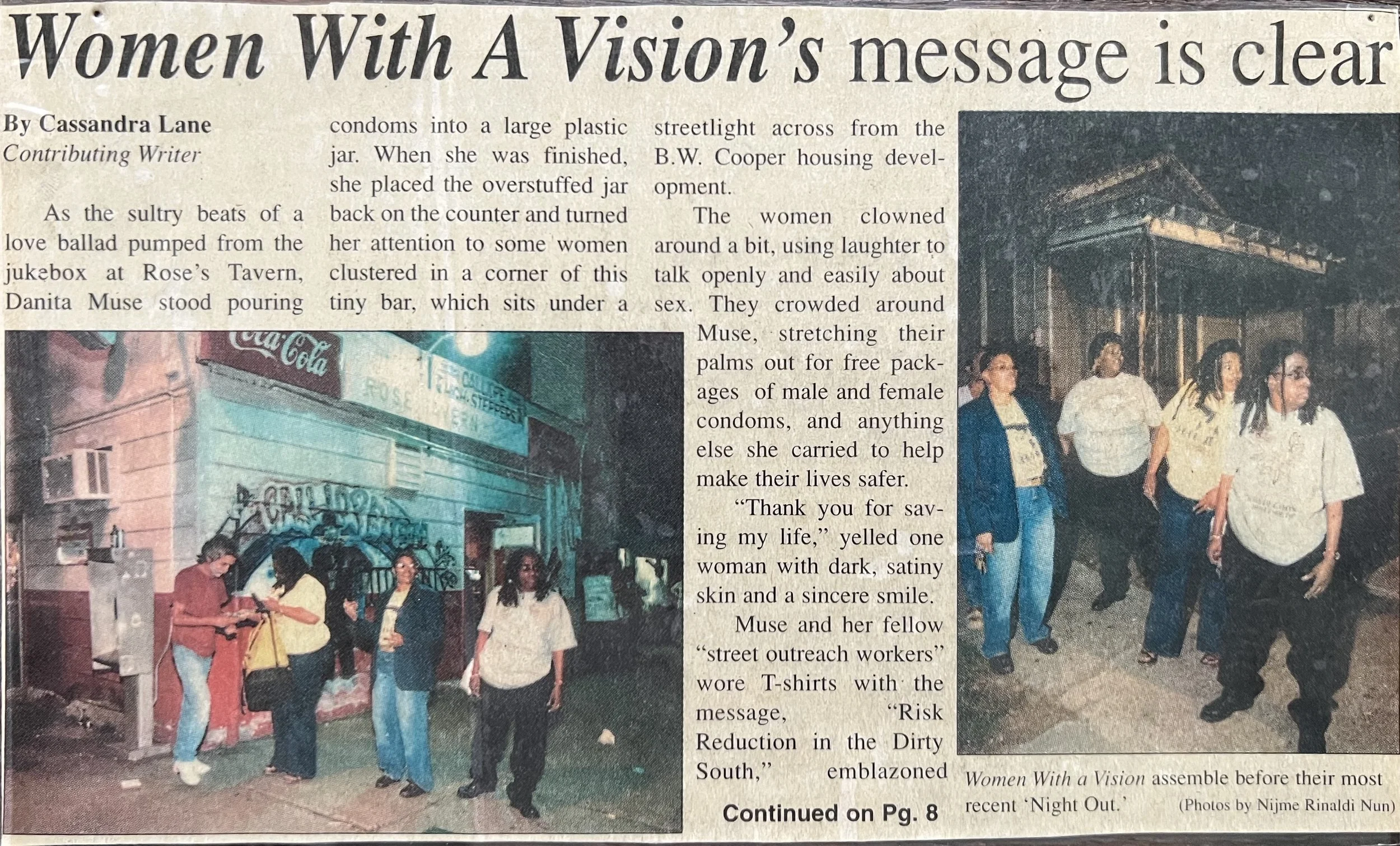
Founding WWAVBlack AIDS and Mass Criminalization
WWAV’s founding was an act of refusal and otherwise world-building. In 1989, the United States was rounding the corner on nearly two decades of the so-called war on drugs. From their own front porches, our foremothers bore witness to exactly how this latest reconfiguration of the isolate-blame-criminalize-destabilize-erase-take racial capitalism playbook was unfolding. Decades of divestment had gutted the social safety net and isolated their people from necessary supports and services. Meanwhile, racist stereotypes of “welfare queens” were being used to blame Black women for this violence, just as sensationalized stories about “crack babies” were being used to criminalize these women and destabilize their families. The next step was erase. Rates of hiv infection were exploding, and the numbers of new infections among Black people were fast exceeding those among white people and have continued to ever since. By the early 1990s, hiv was the second leading cause of death for Black women between the ages of twenty-five and forty-four.
That lethal fact underlined for our foremothers that racism is, as Ruth Wilson Gilmore has taught us, best understood as “the state-sanctioned and/or legal production and exploitation of group-differentiated vulnerabilities to premature death.” Place-making under mass criminalization, like place-making under all systems of racial capitalism, depended on regulating which bodies could take space, indeed, could exist.
When our foremothers came together from their various health and human service positions citywide to take their community’s health into their own hands, they were, in the words of Fannie Lou Hamer, “sick and tired of being sick and tired.” They were also doing what Black women have always done. Black women’s organizing in counterpurpose to the white supremacist misogynistic death logics of racial capitalism has been a durable force in American history. This is a necessary point to emphasize. Too often, even well-meaning critiques of our current order nevertheless extend its white supremacist logics by scripting Black people as mere recipients of aid or as victims of neglect, but never as health activists who create programs and change policy at every juncture. When our foremothers founded WWAV, they drew on the ideological and material tools of an unbroken line of Black women’s health activism in the South.
They stood with the drug user and sex worker communities that no one else wanted to work with. In partnership with these communities, our foremothers demanded that the whole rotten system be transformed. And, most importantly, they showed that it could be transformed by being in community and making the world their people needed.